

Product lifecycle management (PLM) software sits at the center of drug development, medical device design, and formulation work. It holds your design history files, tracks engineering change orders, and links directly to the quality records regulators expect to see intact and traceable. That’s exactly why licensing this software isn’t a routine IT task in your world. A change that would be a two-minute help desk ticket anywhere else can mean a validation review here.
If you manage software licenses for a regulated R&D or engineering group, you already know the tension: finance wants you to right-size a pharmaceutical PLM contract, and your quality team needs assurance that nothing about the validated environment changed without documentation. Getting both right takes more than a spreadsheet of seat counts.
Why PLM licensing looks different in a regulated environment
In most industries, a license manager tracks who’s using what and reclaims idle seats. In pharma and life sciences, you’re also tracking which environment a user touched. A validated production instance, a QA/test instance, and a development sandbox often run under the same PLM contract, but they don’t carry the same regulatory weight. Adding a user to production isn’t the same action as adding one to a sandbox, even if the license terms treat them identically.
Vendor licensing models rarely account for this. A named-user or concurrent-use agreement written for a general manufacturing customer doesn’t distinguish between “this person needs occasional access to a validated system” and “this person needs a permanent seat in an environment under change control.” You end up reconciling a generic license structure against a validation framework the vendor never designed for.
Frameworks like GAMP 5 and requirements under 21 CFR Part 11 or EU Annex 11 don’t dictate how you license software, but they do dictate how much documentation surrounds any change to a validated system, including changes in who can access it. That documentation burden is the real difference between managing pharmaceutical PLM licenses and managing them in any other industry.
Additional Read: What is software compliance? A practical guide for IT and procurement teams
Where the costs creep in
Cost overruns in regulated PLM environments rarely come from one bad decision. They accumulate from a handful of patterns that are easy to miss until renewal time:
- Duplicate licensing across environments. Teams often provision full named-user licenses for production, QA, and development separately, even when the same engineers move between them, because splitting access cleanly feels riskier than over-provisioning.
- Licenses purchased for submission crunches that outlive the crunch. A clinical trial submission or regulatory filing deadline drives a spike in named users. Those licenses often stay active long after the deadline passes, because nobody circles back to right-size once the pressure is off.
- Validation cycles that lock you into a tier. If reducing seat count or changing a license model would touch the validated configuration, teams often defer the change rather than reopen a validation package, even when the seats sit idle.
- Shadow instances for exploratory work. Engineers sometimes stand up unvalidated copies of a PLM tool to test changes without touching the production environment, adding license cost that never shows up in your official environment inventory.
None of these are unusual decisions. They’re rational responses to a validation process that makes change expensive. But they add up to licenses your organization is paying for without a clear line back to actual need.
Compliance risk hides in your license data too
License mismanagement in a regulated environment isn’t only a budget problem. It’s an audit exposure. If your license usage data can’t clearly show who had access to a validated system, and when, you’re not ready for the question an inspector or internal auditor is likely to ask.
Under-licensing creates its own risk: concurrent-use violations or access outside the terms of your agreement can surface during a vendor audit, and if that access touched a validated environment, it raises data integrity questions under ALCOA+ principles, not just a contract dispute. Auditors increasingly expect license and access logs as supporting evidence for computer system validation, not as a separate IT record kept somewhere else.
The teams that struggle most during an inspection aren’t usually the ones with a license problem. They’re the ones who can’t quickly produce a clean answer to “who accessed this system, and under what authorization” because their license data and their validation documentation were never connected in the first place.
Building a licensing approach that holds up to audit and to budget review
You don’t need to choose between compliance discipline and cost control. A few practices make both easier:
- Keep an authoritative, current record of who’s licensed for each environment, updated as access changes, not reconstructed after the fact when an audit request comes in.
- Loop license changes into your change control process early. A seat addition or removal that might touch a validated environment should go through the same review as any other configuration change, not around it.
- Separate usage data by environment. Reporting on validated production usage alongside sandbox activity makes it harder to answer a straightforward audit question cleanly.
- Review named-user assignments against actual activity before renewal, so a submission-cycle spike doesn’t quietly become your new baseline license count.
- Time renewal negotiations to your project calendar, not just your vendor’s fiscal year, so you’re not locked into peak-usage seat counts during quiet periods.
Getting this right takes visibility you can trust: a record of who used what, on which environment, and when, that your quality team can point to and your finance team can act on.
Additional Read: Enterprise software license management: A buyer’s guide for IT and engineering leaders
Where OpenLM fits in
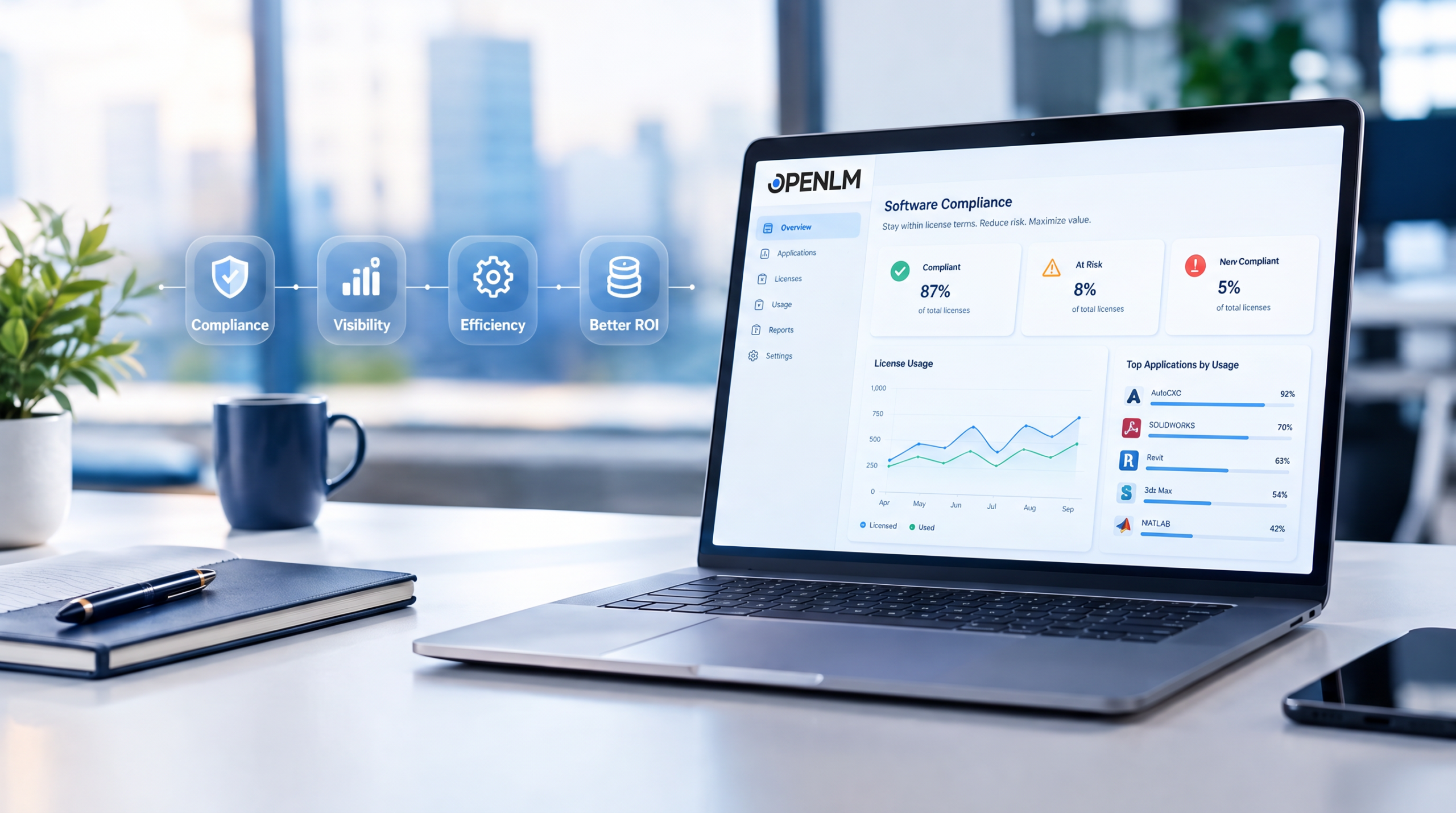
OpenLM gives engineering and R&D teams that visibility for the high-cost, specialty software licenses running their design and validation work, including platforms like Autodesk, Bentley, and Esri. Instead of piecing together access history from scattered logs when an audit or a renewal comes up, you get a real-time, centralized record of usage across your license servers: who’s using a license, on which machine, and for how long.
That same usage data supports the two things regulated teams need most from license management: a defensible audit trail and a factual basis for right-sizing a contract. OpenLM supports 100+ engineering license managers, so if your R&D organization runs a mix of specialty engineering platforms alongside your PLM system, you can bring license visibility into one place instead of maintaining it tool by tool.
Frequently asked questions
What makes PLM license management different in pharma and life sciences?
Validation requirements. A license change in a validated PLM environment can carry documentation and change-control obligations that don’t exist in industries without GxP oversight, which means license decisions need to account for compliance impact, not just cost.
Does changing license counts always require revalidation?
It depends on your validated system’s configuration and your organization’s change control policy, since not every license change touches the validated environment itself. Loop any proposed change past your quality or validation team early so you know whether it triggers additional documentation before you make it.
Should validated and non-validated PLM environments carry separate licenses?
Not necessarily by contract terms; many vendors sell a single pool of named-user or concurrent licenses across environments. What matters more is that your own usage records distinguish between environments, so you can show which validated instance a given license touched and when, regardless of how the underlying agreement is structured.
What should license access documentation include for an FDA inspection?
At minimum, a running record of who was authorized on a validated PLM system, when that access was granted or changed, and how it maps back to a documented business need. Inspectors typically want to see that access changes went through your existing change control process, not that the record was assembled after the fact.
Does switching PLM vendors trigger a full revalidation?
Usually, yes. Because the vendor’s software is part of your validated environment, replacing it typically means validating the new system from scratch rather than simply updating change control records. That’s a strong reason to right-size and renegotiate your current license setup before renewal, so a vendor switch stays a planned decision rather than one forced by unexpected costs.
How is PLM license compliance different from license cost optimization?
Compliance means staying within what your agreement allows: seat counts, deployment scope, and permitted environments. Optimization means getting full value from what you’re already licensed to use, like reclaiming idle named-user seats. In a regulated environment, you need both: compliance keeps you audit-ready, and optimization keeps you from paying for capacity your team isn’t using.