Engineering and development software costs represent a massive portion of your IT budget. Applications from vendors like Autodesk and IBM are essential, but their traditional licensing costs are high. To provide more deployment choices, many vendors offer token licensing models.
Instead of buying a fixed license for every user, you purchase a pool of prepaid tokens. When a user opens an application, the system deducts a specific number of tokens from your pool. Once the user closes the application, token consumption stops.
This approach sounds simple, but managing it requires careful attention. You must understand how token licensing models work to avoid unexpected vendor invoices and budget overruns.
The pros of token licensing models
Token-based licensing offers distinct advantages for specific organizational structures. When you deploy this model correctly, you can achieve major benefits.
Flexibility for occasional users
You might have engineers or developers who only need a specific tool for a few hours a week. Buying a full subscription for these users is wasteful. Tokens allow occasional users to access the software whenever they need it without forcing you to buy dedicated seats.
Access to full product suites
Many engineering vendors bundle their entire software catalog into their token programs. Your team can use tokens to access secondary applications that you rarely purchase individually. This opens up new tools for your engineers without requiring extra procurement approvals.
Reduced upfront expenditure
Token models allow you to pay for actual consumption rather than potential use. You can lower your initial software acquisition costs by purchasing a smaller pool of tokens that aligns with your average daily needs.
Additional Read: Why license usage visibility matters—and how to achieve it
The cons of token licensing models
While token systems offer flexibility, they also introduce significant financial risks if you leave them unmonitored.
Runaway costs from idle sessions
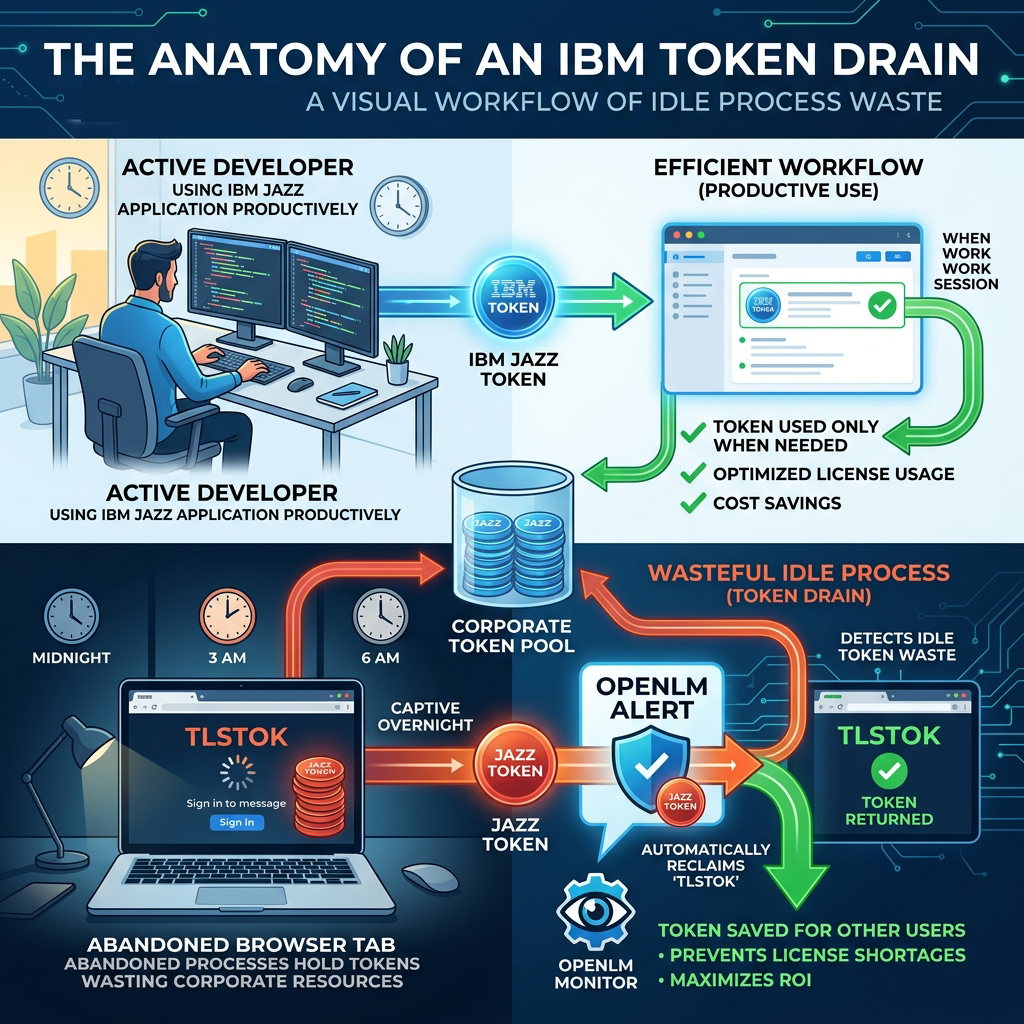
The largest downside to tokens is user negligence. If an engineer opens an application in the morning, consumes tokens, and leaves the program running over the weekend, your pool drains continuously. For example, IBM Jazz tokens can disappear quickly due to idle background processes or an abandoned browser tab. A few forgotten sessions can consume your entire quarterly token budget in days.
Unpredictable budgeting
Traditional licenses have fixed annual costs. Token consumption varies wildly based on project deadlines, new hires, and seasonal workloads. This variability makes it difficult for IT and procurement managers to forecast annual software expenditures accurately.
Limited native visibility
Software vendors provide basic portals to show your remaining token balances, but these portals rarely show real-time utilization. They often hide the specific details about who is wasting tokens. You cannot fix bad consumption habits without deep, real-time visibility.
Managing Autodesk Token-Flex and IBM Jazz models
Different vendors implement token structures in distinct ways. Managing them requires a solution that understands these vendor-specific mechanisms.
Autodesk Token-Flex optimization
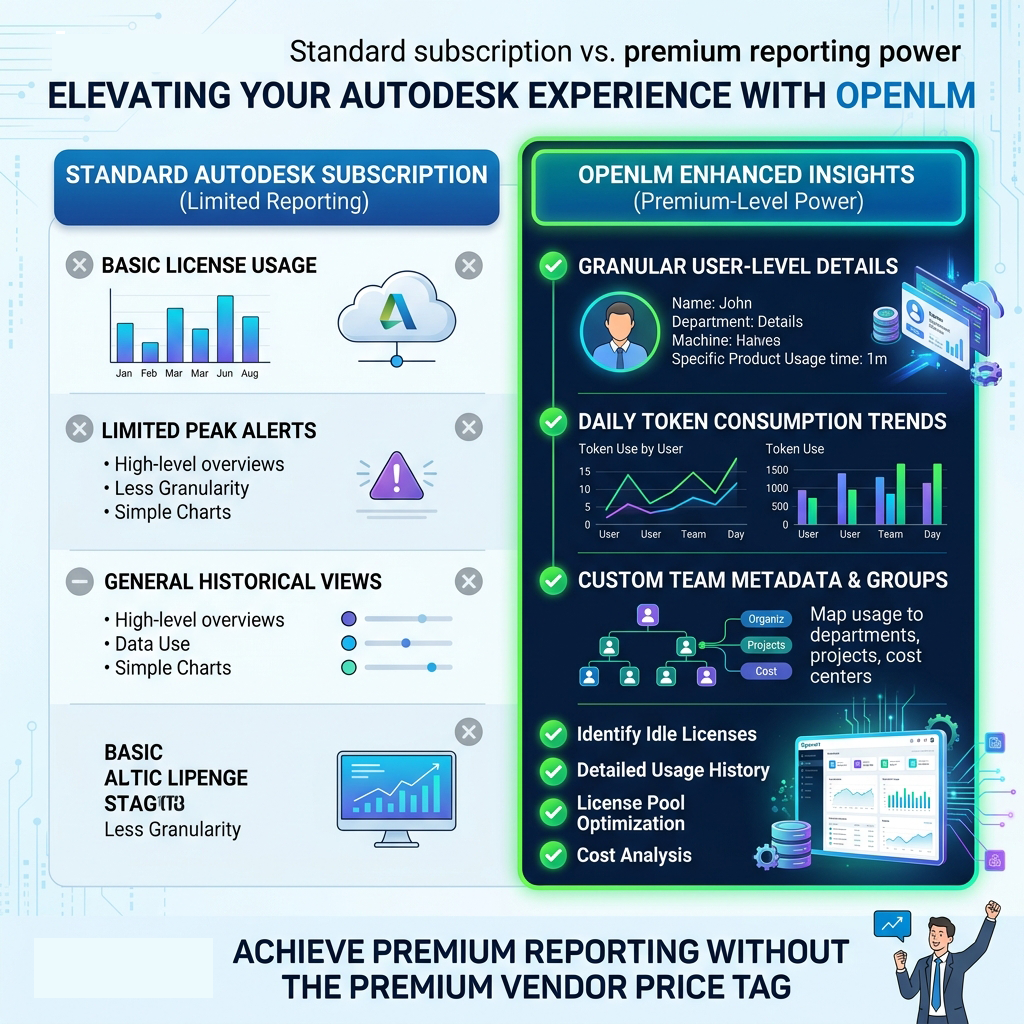
Autodesk uses a pay-per-use model called Token-Flex. To get advanced daily token reporting and individual user trends from Autodesk natively, you must purchase an expensive Premium or Enterprise plan.
OpenLM changes this dynamic. With OpenLM, you can access premium-level reporting benefits while maintaining a basic, standard Autodesk subscription. OpenLM tracks daily token usage trends by individual user, product, and version. You can also add your own metadata, such as location or team details, to enrich your usage reports.
IBM Jazz token governance
IBM Jazz platforms—including Rational Team Concert (RTC), Rational Quality Manager (RQM), and DOORS Next Generation—frequently use token-based licensing models. IBM manages these through the Rational License Key Server (RLKS), tracking them under a feature called “TLSTOK”.
OpenLM treats the TLSTOK feature as a complete package. It allows you to see exactly which individual applications and features within the Jazz environment pull from your token pool in real time. This monitoring eliminates the visibility gap that occurs when modern collaborative tools and legacy systems operate in separate silos.
Additional Read: OpenLM MCP Connector: How to query your software license data with AI
How OpenLM helps you optimize token usage
You do not have to guess whether your token investment is paying off. OpenLM supports more than 90 engineering license managers, giving you complete control over your software assets across all your engineering stacks.
OpenLM tracks exactly who uses your tokens, which projects consume the most resources, and when your software sits idle. The system monitors user activity directly on the workstation. If an engineer leaves a high-cost Autodesk or IBM application open without using it, OpenLM detects the idle state.
You can configure the system to alert the user or close the idle session automatically. This active harvesting process releases the license and saves your tokens for active team members.
Furthermore, OpenLM analyzes what is called Token Usage Intensity. This analysis tracks your precise token consumption at peak load times. When your next contract renewal arrives, you can use this verifiable usage data to negotiate your corporate Enterprise License Agreements (ELAs) and right-size your token purchases.
FAQs
What is the main difference between concurrent licenses and token licensing models?
Concurrent licenses limit the number of users who can access the software at the exact same time. Token licensing models allow unlimited simultaneous access but charge your pool based on the specific volume of tokens consumed during a set timeframe.
How does OpenLM track IBM tokens specifically?
OpenLM monitors the “TLSTOK” feature within the IBM Rational License Key Server. It tracks exactly how many tokens are checked out and identifies the specific applications, such as DOORS or RTC, that consume them.
Can I monitor legacy software alongside modern token models?
Yes. OpenLM provides a unified view for both modern token environments and legacy configurations. For example, it connects directly to the older IBM LUM (License Use Management) server to track check-outs and historical trends alongside your modern IBM Jazz token pools.
How do idle applications impact my token balances?
Idle applications continue to drain tokens until the user exits the application or the token window expires. OpenLM prevents this waste by detecting idle workstations and automatically reclaiming those seats.