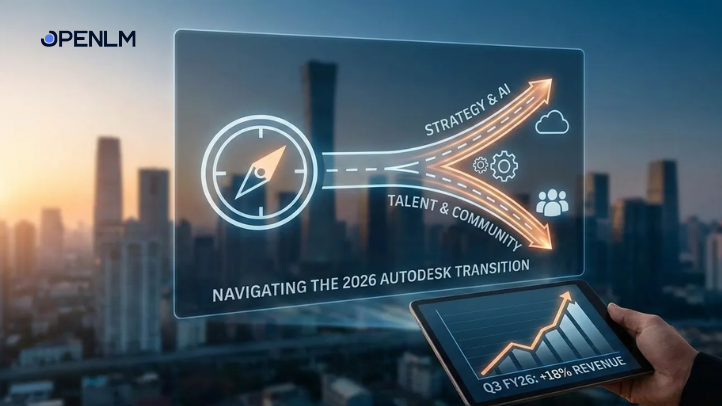
The AEC and design technology landscape reached a significant milestone yesterday. On January 22, 2026, Autodesk officially announced an enterprise-wide organizational restructuring, including a 7% reduction in its global workforce—impacting approximately 1,000 highly skilled professionals.
As a long-term partner in the Autodesk ecosystem, we believe it is important to look past the headlines and understand what this means for the industry, the talent, and your own software operations.
The Paradox: Growth Amidst Transformation
For many, the most striking part of this news is the context of Autodesk’s financial health. This restructuring is not a response to a downturn, but a calculated pivot toward a new business model.
In their recent Q3 FY26 results, Autodesk reported:
- $1.85 billion in revenue, representing a robust 18% increase year-over-year.
- Strong outperformance in the AECO (Architecture, Engineering, Construction, and Operations) sector.
- A successful transition toward their Direct-to-Customer Transaction Model, marking the final phase of their multi-year go-tomarket transformation.
The company has made it clear: these changes are designed to reinvest savings into emerging priorities like AI, Platform resilience, and Industry Clouds (Autodesk Forma).
To the Talent: We See You
Behind every corporate restructuring are names, faces, and years of deep technical expertise. These are the individuals who built and supported the tools that shape our skylines.
To those affected: The industry knows your value. Navigating the intersection of complex CAD/BIM environments and global sales strategy is a rare skill set. While corporate paths may diverge, your expertise remains the backbone of this industry.
(A note from us: At OpenLM, we are always looking for visionaries who understand this space as deeply as we do. If you are looking for your next challenge in software management and optimization, we’d love to talk. Reach out to us at hr@openlm.com).
Our Commitment: Supporting Every Licensing Frontier
As Autodesk fundamentally changes how they sell software—moving toward direct billing and cloud-centricity—the complexity of managing those costs shifts back to the customer. At OpenLM, our mission has always been to help organizations stretch their licensing to the absolute limit.
We continue to fully support and optimize all Autodesk licensing methods, ensuring you have visibility regardless of your contract type:
- Named-User Subscriptions: Maximizing ROI by identifying and re-harvesting underutilized seats.
- Autodesk Flex (Daily Tokens): Managing high-cost daily consumption to prevent “token burn” on idle sessions.
- Network Licensing: Ongoing support for those still utilizing or transitioning away from traditional network models.
- Token-Flex (Enterprise): Deep visibility into complex enterprise consumption agreements.
- The New Direct Model: Providing the usage data required to negotiate directly with Autodesk with confidence.
The software landscape is changing, and the “Direct” future is here. But whether you are using tokens, seats, or legacy network licenses, our goal remains the same: Maximize your creativity, minimize your waste.
If you are concerned about how these organizational shifts might affect your upcoming renewals or your internal support structure, our team is here to help you navigate the data.