At OpenLM, our 2026 roadmap is focused on one core objective: Bulletproof reliability. As our global enterprise partners—including many industry leaders scale their autonomous licensing and token management, the underlying data architecture must evolve to stay ahead of demand.
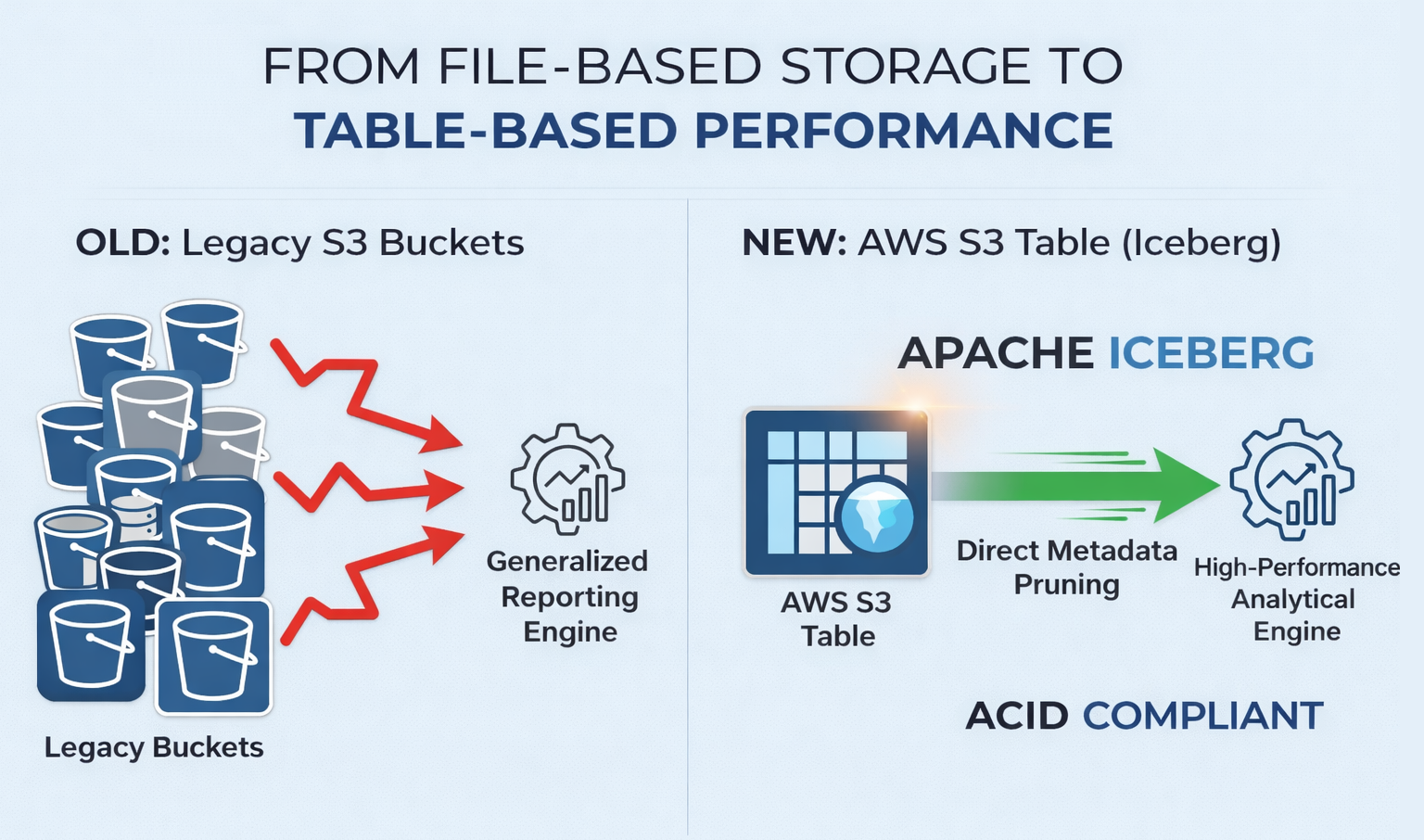
To meet these requirements, we are migrating our core storage layer from traditional Amazon S3 buckets to AWS S3 Tables, powered by the Apache Iceberg table format.
Why we are evolving our architecture at OpenLM
For years, the industry standard was to store reporting data in dedicated S3 buckets—a “Silo Model”. While this provided physical separation, it introduced significant technical debt, including variable query speeds and high maintenance overhead as datasets grew into the terabytes.
By moving to a managed table format, we are shifting from a file-based system to a high-performance Pooled Model. This transition is necessitated by AWS service quotas, which restrict Table Buckets to 10 per region, making the old “bucket-per-tenant” strategy architecturally impossible at scale.
The technical advantages for our customers
The transition to S3 Tables provides three primary benefits that directly impact your daily operations:
Accelerated query performanceTraditional S3 storage requires scanning thousands of files. S3 Tables uses advanced metadata-level pruning to isolate data instantly.
Experience significantly improved load times for QuickSight visualizations and dashboards.
Supports vastly higher Transactions Per Second (TPS) compared to unmanaged tables.
Metadata pruning reduces “data scanned” by 20–50%, ensuring near-instant analytics. |
ACID compliance and data integrityBy moving to the Iceberg table format, we introduce ACID (Atomicity, Consistency, Isolation, Durability) transactions to our storage layer.
Prevents metadata corruption and ensures updates or deletes are 100% successful or rolled back.
Users gain the ability to query historical data versions for precise point-in-time audits.
Seamlessly update data structures without breaking your existing reports. |
Automated maintenance (Self-healing)Our new architecture automates the “hygiene” tasks that previously required manual infrastructure intervention or Glue jobs.
Merges small files into efficient blocks automatically to maintain high speed.
Removes the need for manual “VACUUM” or cleanup jobs, reducing transactional costs.
Support for S3 Tables Intelligent-Tiering automatically moves aged data to lower-cost archive tiers after 30/90 days. |
Architectural change: Moving to high-performance multi-tenancy
As part of this upgrade, we are moving away from the “Dedicated Bucket per Customer” model to a unified, high-performance S3 Tables environment.
Why this change is better for your security and speed
- Namespace isolation
Data isolation is now achieved via Table Namespaces. Each tenant is logically grouped into a unique namespace, ensuring data remains private and inaccessible to others.
- Consistent security posture
Access is strictly managed through IAM resource-based policies and AWS Lake Formation, mirroring the security of physical separation within a higher-performance framework.
- Lower infrastructure latency
A unified table structure eliminates “cold starts” and API rate limiting often found in decentralized bucket models, providing a high-bandwidth data stream to your tools.
Note: The “Dedicated Bucket” promise is being retired in favor of this significantly more robust, ACID-compliant, and “Bulletproof” architecture.
Our commitment
This migration is an investment in the longevity and reliability of your license management data. By reducing operational overhead and automating maintenance, we ensure the OpenLM Platform remains the most stable and performant solution in the market.
Frequently asked questions
How is my data kept private if we are no longer using “Dedicated Buckets”?
Data security remains our top priority. While we are moving from a “Silo Model” to a “Pooled Model” to overcome AWS service quotas, isolation is now enforced via Table Namespaces. Each customer is logically grouped into a unique namespace, with access strictly controlled by IAM resource-based policies and AWS Lake Formation. This ensures that your data remains logically private and completely inaccessible to other tenants.
Will this migration cause any downtime for my reporting dashboards?
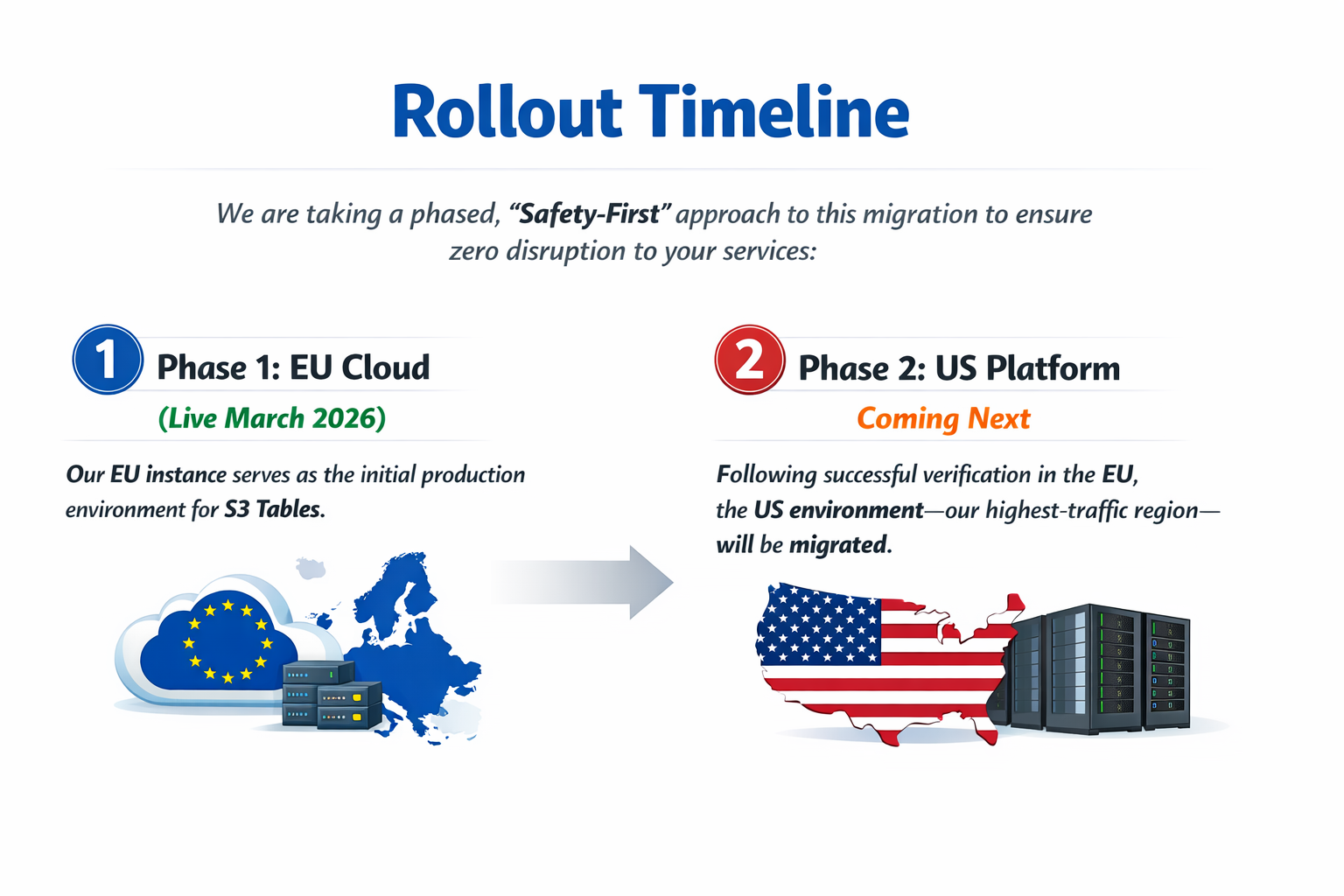
No. We are executing a Zero Downtime Migration. The transition involves an internal background process to move data from existing buckets into the new table structure. You can continue to access your reports and manage licenses without interruption throughout the rollout.
What tangible performance improvements will I see?
The move to AWS S3 Tables and the Apache Iceberg format provides a significantly faster experience:
- Faster Dashboards: You will experience up to 3x faster query performance for visualizations.
- Higher Throughput: The system supports 10x higher Transactions Per Second (TPS) for data ingestion.
- Smarter Loading: Optimized metadata pruning reduces the volume of “data scanned” by 20–50%, leading to near-instant report generation.
Does this change affect how I audit my historical data?
Yes, it improves it. The new architecture introduces “Time Travel” capabilities. This allows you to query historical versions of your data for precise point-in-time audits. Additionally, the system now supports ACID transactions, which prevents metadata corruption and ensures that every data update or delete is 100% consistent and reliable for compliance reporting.
How does OpenLM manage long-term data storage costs in this new model?
We have implemented S3 Tables Intelligent-Tiering. This feature automatically monitors data usage and moves older, infrequently accessed information to lower-cost storage tiers after 30 or 90 days. This automation ensures high performance for your recent data while maintaining cost-efficiency for your long-term archives.