In the early 2000s, the IT world went through a revolution: Server Virtualization.
We realized that running one application on one massive physical server was inefficient. It was rigid, wasteful, and hard to manage. So, we started abstracting the hardware. We took one big physical resource and sliced it into flexible “Virtual Machines” (VMs) that could be spun up, resized, and assigned to specific owners.
Today, Software Asset Management is facing the same “Hardware Era” problem—but this time, it is about named user licenses.
Most enterprise organizations are sitting on massive pools of named licenses—think 1,000 seats of Adobe Creative Cloud, Microsoft 365, or Autodesk. To the vendor, this is just a list of 1,000 emails. But to the IT Manager, it is a monolithic administrative nightmare.
It is time to apply the logic of Virtualization to Licensing. Enter the OpenLM Virtual License Manager (VLM).
The concept: Splitting the atom
The core philosophy of VLM is identical to VM technology: Abstraction.
VLM sits between the vendor’s portal (where your 1,000 licenses live) and the end-users. It takes the raw input—a massive pool of 1,000 Named Licenses—and allows you to virtually “carve” them into smaller, logical units that match your actual organization structure.
A massive pool of 750 users is too big to manage effectively. You need granularity. Instead of one unmanageable list, VLM allows you to slice it recursively:
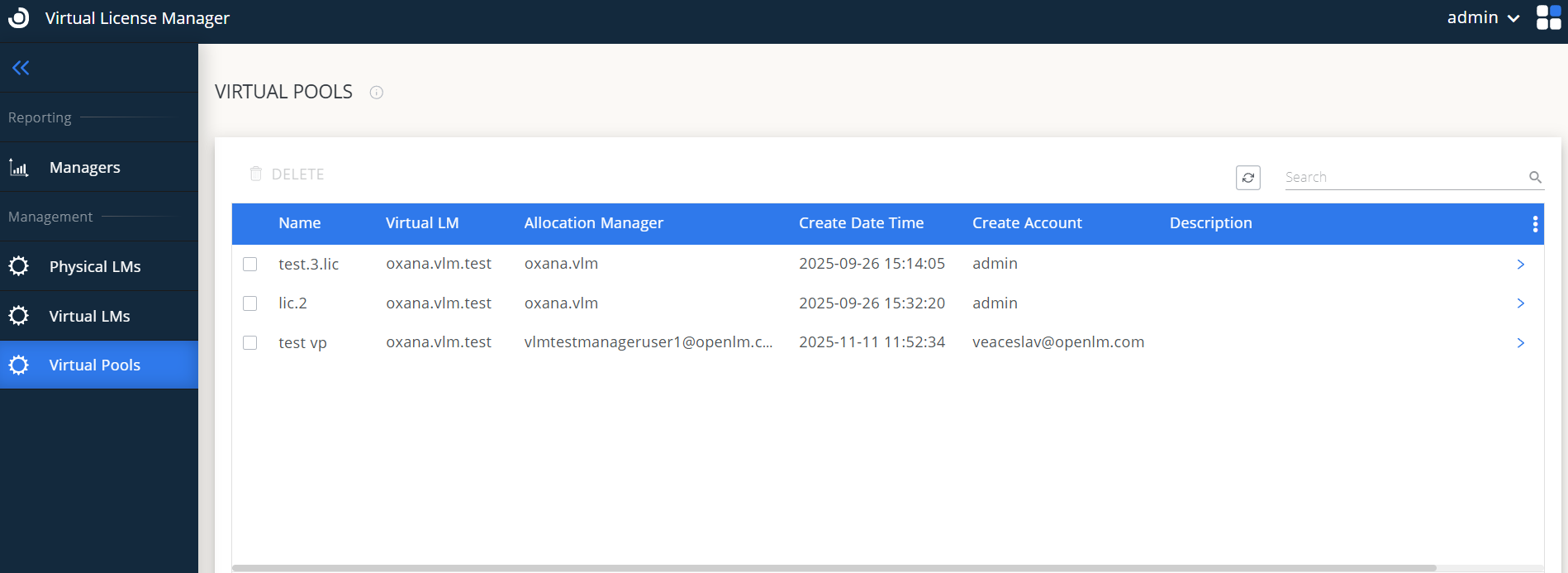
- Virtual pool A (Project “Falcon”): 50 Licenses -> Delegated to the Project Manager.
- Virtual pool B (Simulation Dept): 200 Licenses -> Delegated to the Engineering Lead.
- Virtual pool C (UK Branch): 150 Licenses -> Delegated to the Local IT Support.
- Virtual pool D (Interns): 20 Licenses -> Delegated to the Training Coordinator.
This isn’t just a reporting trick. It is a functional segregation that solves two critical problems: allocation and delegation.
Additional Read: The “December Trap”: Why annual subscriptions are costing you more than you think
Pillar 1: The allocation problem (The “ticket” bottleneck)
In a standard environment, managing named licenses is a manual bottleneck.
If a new engineer joins the “Simulation” team and needs a license, they have to open a ticket with Central IT. Central IT then has to log into the vendor portal, find an available seat (or buy a new one), and assign it.
Multiply this by 1,000 users. The friction is immense.
The “Simulation” team might have budget for 200 seats, but they are paralyzed waiting for IT to process the assignments.
With VLM, you virtualize the resource to guarantee availability. You allocate a block of 200 licenses strictly to that department. To the users in that project, the licenses are ready and waiting. To the IT manager, you have successfully offloaded the “traffic jam.”
Pillar 2: The delegation breakthrough (trust but verify)
The second, and perhaps more powerful concept, is delegation.
In most companies, the “Global License Administrator” is a central IT figure. They have the “Super Admin” password. But they do not know the users.
- They don’t know that John is on vacation and his expensive license is sitting idle.
- They don’t know that “Project X” just finished and 50 licenses should be freed up.
- They don’t know which engineer actually needs the “Premium” features vs. the “Standard” ones.
A pool of 700 users is too large to delegate to one person—no manager knows 700 people’s daily schedules. VLM allows you to break this down into “Human-Scale” units (e.g., 20–50 users).
VLM solves this via “Safe Delegation.”
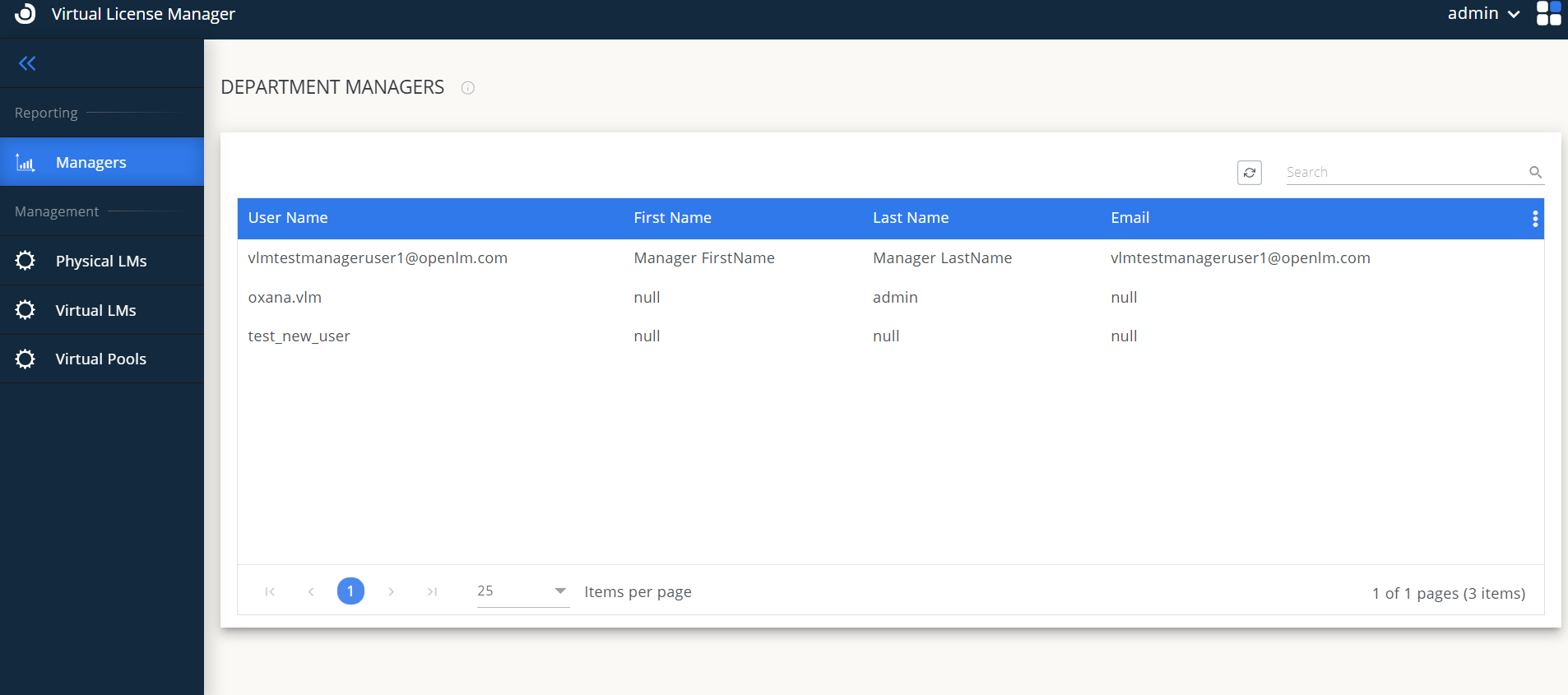
You can assign a “Local Administrator” to a specific Virtual Pool.
You tell the Project Manager of “Falcon”: “Here are your 50 licenses. You decide who gets them. You can assign them to new hires, revoke them from leavers, or shuffle them around as you see fit.”
This is powerful because:
- Context: The decision is made by the person closest to the event. They know exactly who needs what and when.
Safety: The Team Leader only sees their 50 licenses. They function as an admin within their sandbox, without risking the integrity of the other 950 licenses in the organization.
Additional Read: FlexLM license management: How to optimize usage and reduce costs
Real-world application: The broadcasting giant
We recently deployed this exact strategy for a world-famous broadcasting body managing thousands of AVID Media Composer licenses.
Their challenge was operational risk. They operated across roughly 20 geographical regions (London, New York, APAC, etc.), each needing autonomy. However, technically, they only had two massive, global license pools.
The core issue was Configuration Safety.
They wanted to let local managers assign licenses, but they couldn’t give them “Admin Access” to the main vendor portal.
Why? Because the portal was global. Every time a local admin in Singapore tried to change a setting for their team, they often accidentally overwrote the configuration for the London team. The “Global Admin” interface was too powerful and too dangerous to share.
The fix:
Using OpenLM VLM, we virtually sliced those two massive pools into 20 distinct, regional buckets.
- The “London Admin” sees only the London Pool.
- The “Singapore Admin” sees only the Singapore Pool.
They can now assign, revoke, and manage their local users freely. But critically, they cannot touch the global configuration. VLM acts as the safety layer, ensuring that one region’s agility doesn’t become another region’s outage.
Conclusion: The flexible future
Just as we wouldn’t dream of running a modern data center without VMware or Hyper-V, we shouldn’t be attempting to manage 1,000+ Named User licenses via a single spreadsheet or a single admin login.
Monolithic pools are a relic of the past. The future belongs to flexible, virtualized units that empower local managers to control their own resources without calling IT.
Delegate the control. Centralize the oversight. Virtualize the asset.