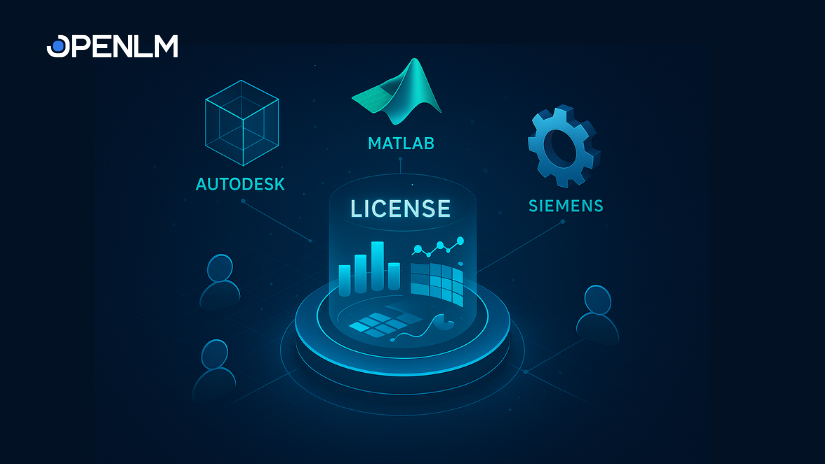
Managing engineering and design software is a high-stakes balancing act. If you oversee these critical assets, you likely rely on FlexLM (FlexNet Publisher) to control access. It is the industry standard for FlexLM concurrent license management, used by major vendors like Autodesk, MATLAB, and Siemens.
However, relying solely on standard FlexLM tools often leaves you with blind spots. To truly control your budget, you need to understand what standard managers can do—and where you need more advanced capabilities to drive FlexLM license cost optimization.
What is standard FlexLM license management?
At its core, FlexLM license management controls how software is distributed across your network. It generally utilizes a “floating” license model. In this setup, a central FlexLM license server holds a pool of licenses. When a user opens an application, they check out a license; when they close it, the license returns to the pool.
Standard FlexLM reporting tools provide basic visibility into this process. They can tell you:
- How many licenses are currently checked out.
- Who has checked out a license.
- If the FlexLM license manager is up and running.
You will also encounter the distinction between floating and node-locked licenses. Node-locked licenses are tied to specific machines, making them predictable but inflexible. Floating licenses, while more efficient for large teams, require robust FlexLM license monitoring to prevent bottlenecks.
Additional Read: Take control of Autodesk named-user licensing with OpenLM
The challenges of basic FlexLM monitoring
While standard tools cover the basics, they struggle to answer the deeper questions that affect your bottom line.
Limited visibility into “True” usage
A standard manager sees a license as “in use” the moment it is checked out. It does not know if the engineer is actively designing or if the software is idling in the background while they attend a meeting. This gap makes it difficult to differentiate between genuine need and wasted resources.
Reactive denial management
License denials happen when demand exceeds supply. Basic logs record these events, but they often lack context. Without deeper FlexLM license denials analysis, you cannot easily tell if a denial was caused by a legitimate shortage, a specific server outage, or a user hogging a license they aren’t using.
The high cost of over-provisioning
Because of these blind spots, many organizations over-purchase licenses to be “safe.” This avoids user complaints but inflates your software spend significantly.
How OpenLM delivers advanced optimization
To move from simple monitoring to true FlexLM license cost optimization, you need a solution that goes deeper than the standard logs. OpenLM builds upon the FlexLM foundation to provide the granular insights and automation required to reduce costs.
Monitor active processes, not just checkouts
OpenLM moves beyond simple “checkout” data. Our Process & DLL Monitoring provides granular insights into exactly how software is being used. By monitoring individual processes, you can identify when an application is open but idle. OpenLM can then automatically release these unused licenses, returning them to the pool for others to use. This ensures you maximize the value of your existing licenses before buying new ones.
Turn data into real-time decisions
Waiting for monthly reports is too slow. OpenLM delivers real-time visibility into license usage and performance metrics. You gain immediate insight into current demand and denials, enabling you to distinguish between a critical license shortage and a momentary spike. This helps you avoid panic purchases and ensures continuous software availability for your team.
Gain context with Directory Sync
OpenLM enriches your usage data by synchronizing with your organization’s directory service (like Active Directory). Instead of seeing a cryptic username, you see the user’s full context—their department, group, and role. This allows you to allocate costs accurately (chargebacks) and make data-driven decisions about which departments actually need more resources.
Additional Read: Top four software license renewal strategies for 2026
Optimize usage across boundaries
Managing global licenses can be complex. OpenLM’s Virtual License Manager allows you to create a “virtual layer” on top of your physical FlexLM license servers. You can slice your license portfolio into unlimited virtual pools and dynamically assign them to specific teams or projects. This improves license accessibility and eliminates usage conflicts without the need for rigid physical infrastructure changes.
Take control of your engineering licenses
You don’t have to settle for basic visibility. By upgrading your FlexLM license monitoring with OpenLM, you can eliminate waste, automate license harvesting, and ensure your engineers always have the tools they need.
Would you like to see exactly how much you can save?
Start your free trial with OpenLM today.
Frequently Asked Questions (FAQs)
What is FlexLM License Management?
FlexLM (FlexNet Publisher) is a widely used software licensing manager that allows administrators to control software access through floating or concurrent licenses. It manages license check-outs and check-ins from a central server, ensuring usage complies with vendor agreements.
Why is FlexLM optimization important for engineering and CAD tools?
Engineering software licenses are expensive assets. Optimization is critical to prevent “license camping” (hoarding licenses), minimize costly denials that stop work, and avoid unnecessary spending on extra seats when existing ones are simply underutilized.
What tools help optimize FlexLM license usage?
While FlexLM provides basic logs, tools like OpenLM offer advanced optimization. OpenLM provides real-time monitoring , idle process detection for automatic license harvesting , and directory synchronization for detailed usage reporting by department.
What are the main challenges in managing FlexLM licenses?
The primary challenges include a lack of visibility into “true” active usage (vs. idle time), difficulty in distinguishing between server outages and license shortages (denials), and the complexity of managing licenses across different time zones or global offices.