The economics of enterprise software have shifted dramatically. Vendors that once sold perpetual licenses now bill monthly. Engineering tools that lived on local servers are moving to the cloud. SaaS adoption continues to accelerate across every department, at every level of the organization. And somewhere in the middle of all this change, IT and finance teams are expected to maintain compliance, control costs, and justify every renewal to leadership.
That is a hard problem. And it is the reason license management software has moved from a back-office IT function to a boardroom priority.
In 2026, the best license management tools do far more than track who owns what. They give you real-time usage analytics, automate license reclamation, support FinOps cost allocation models, and increasingly integrate AI-driven intelligence to predict what you will need before you need it. The most advanced platforms are also beginning to support GreenOps practices — helping organizations reduce unnecessary software deployments and improve resource efficiency as part of their broader sustainability commitments.
This guide covers the top license management solutions available today, what each does well, and how to evaluate them against the needs of your organization.
Additional Read: Why FinOps is the new standard for software asset management in 2026
What makes a top license management solution in 2026?
Before diving into specific tools, it helps to understand the criteria that separate genuinely capable platforms from basic tracking tools.
Engineering and specialty software coverage. High-cost engineering applications — tools from vendors like Autodesk, Bentley, ANSYS, Esri, and Dassault Systèmes — represent some of the most complex licensing environments in enterprise IT. A platform that handles Microsoft Office but struggles with FlexLM-based engineering tools is not a complete solution for most mid-to-large organizations.
Hybrid license monitoring. In 2026, the same vendor may offer some products on perpetual or network licenses and others on cloud subscription. A credible platform monitors both environments without requiring separate tools.
Real-time usage analytics. Periodic snapshots are no longer sufficient. You need continuous visibility into who is using what, when, and for how long — especially as subscription-based pricing ties your costs directly to consumption.
FinOps integration. As finance and IT accountability converge, license data needs to flow into cost allocation, chargeback, and financial reporting workflows. Platforms that integrate with enterprise ITSM and financial operations tools have a significant advantage.
AI and predictive capabilities. Leading platforms are introducing AI-driven features that move beyond reporting into recommendation and prediction — identifying underused licenses before renewal, flagging anomalous usage patterns, and suggesting right-sized subscription tiers.
GreenOps and sustainability support. Organizations with ESG commitments are increasingly scrutinizing software waste as part of their sustainability reporting. Idle license monitoring and process tracking contribute directly to reducing unnecessary compute consumption and software sprawl.
With those criteria in mind, here are the top license management solutions in 2026.
1. OpenLM
Best for: Engineering and specialty software license management across hybrid environments
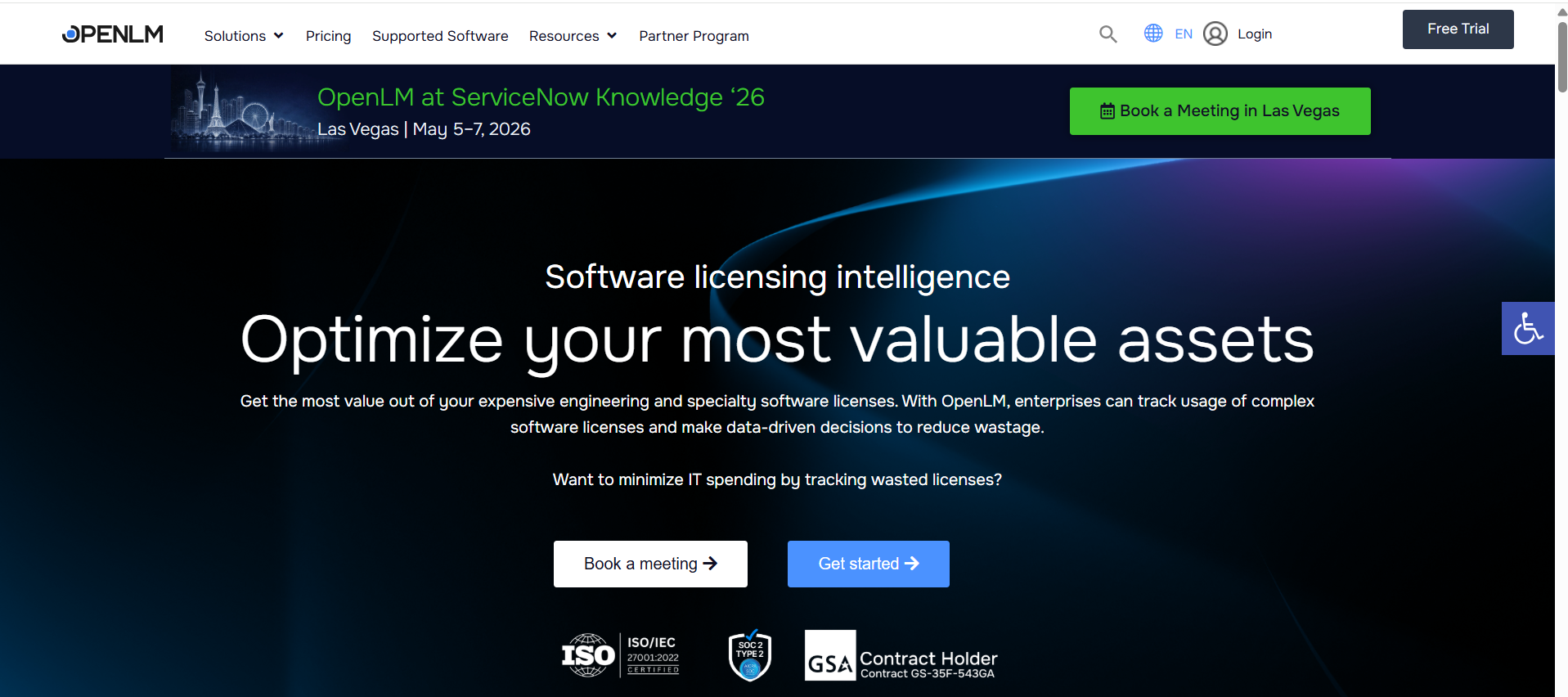
OpenLM leads this list for a specific and well-documented reason: no other platform monitors a broader range of engineering software license managers. With support for 90+ engineering license managers, including FlexLM, LM-X, Sentinel RMS, and many others, OpenLM is the platform of choice for organizations running complex, high-cost engineering software portfolios.
Engineering-first depth. OpenLM was purpose-built for the environments where license management is hardest: CAD, simulation, GIS, structural analysis, and other specialty engineering tools. While many platforms offer broad SAM coverage with shallow engineering support, OpenLM offers the reverse — deep, specialist coverage of the license managers and applications that drive the highest costs and the greatest compliance risk.
Real-time usage analytics. OpenLM provides continuous monitoring of license usage across all connected applications. You can view current and historical consumption, peak usage periods, denial events, and user-level activity. This is the foundation for every optimization decision — reclamation, right-sizing, and renewal negotiation alike.
Subscription Optimizer. OpenLM’s AI-powered Subscription Optimizer analyzes usage patterns and provides intelligent recommendations for right-sizing cloud subscriptions. Currently available for Autodesk Cloud and LinkedIn Sales Navigator, with additional SaaS platforms coming soon, this feature brings machine learning-driven intelligence to one of the most expensive and fast-moving areas of enterprise software spend.
SaaS license monitoring. OpenLM currently monitors approximately 52 SaaS platforms, including Autodesk on cloud and ArcGIS Online from Esri. As major vendors accelerate their transition from on-premise to cloud-delivered licensing, this capability becomes increasingly important for organizations that need unified visibility across hybrid license environments.
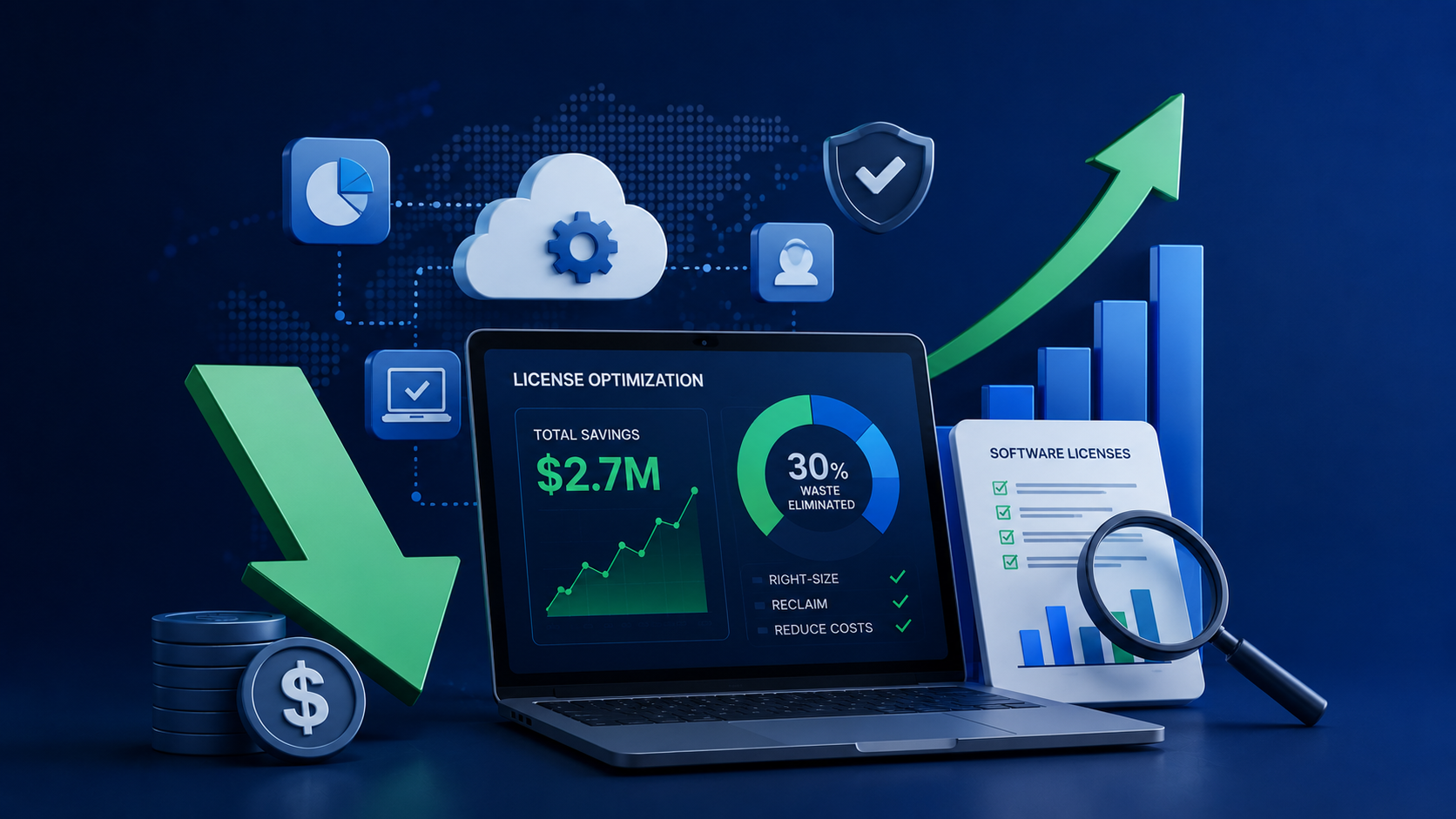
License reclamation. When a license goes idle beyond a defined threshold, OpenLM identifies it automatically and enables reclamation — recovering the license for reallocation or return before it becomes sunk cost. This single feature drives a significant portion of the 15–25% average reduction in engineering software spend that OpenLM customers achieve within their first year.
Cost allocation and chargeback reporting. OpenLM maps license consumption to departments, teams, projects, and cost centers. This supports both showback models — giving teams visibility into what their software usage costs — and full chargeback models that tie costs to the business units generating them. This is the operational foundation for a mature FinOps practice.
GreenOps and sustainability. OpenLM’s idle license monitoring and process monitoring capabilities let IT administrators track not just software usage, but idle applications and background processes consuming resources unnecessarily. This supports GreenOps objectives by reducing wasteful software deployments, improving resource efficiency, and providing the data organizations need for sustainability reporting.
ServiceNow integration. OpenLM integrates with ServiceNow, connecting license management data to enterprise ITSM and financial operations workflows. License usage insights become available where decisions are made — in the same platform that governs procurement, change management, and IT governance.
OpenLM supports both on-premise and cloud deployment, making it a genuinely hybrid-capable platform. For organizations managing engineering software at scale, it represents the most specialized and data-rich option available.
Ideal for: Architecture, engineering, and construction firms; manufacturing and product design organizations; energy and utilities companies; government and defense contractors; higher education and research institutions.
Additional Read: The compliance trap: Why a “lost” dongle is a security time bomb
2. Flexera FlexNet Manager
Best for: Broad enterprise SAM with strong compliance and hybrid IT coverage
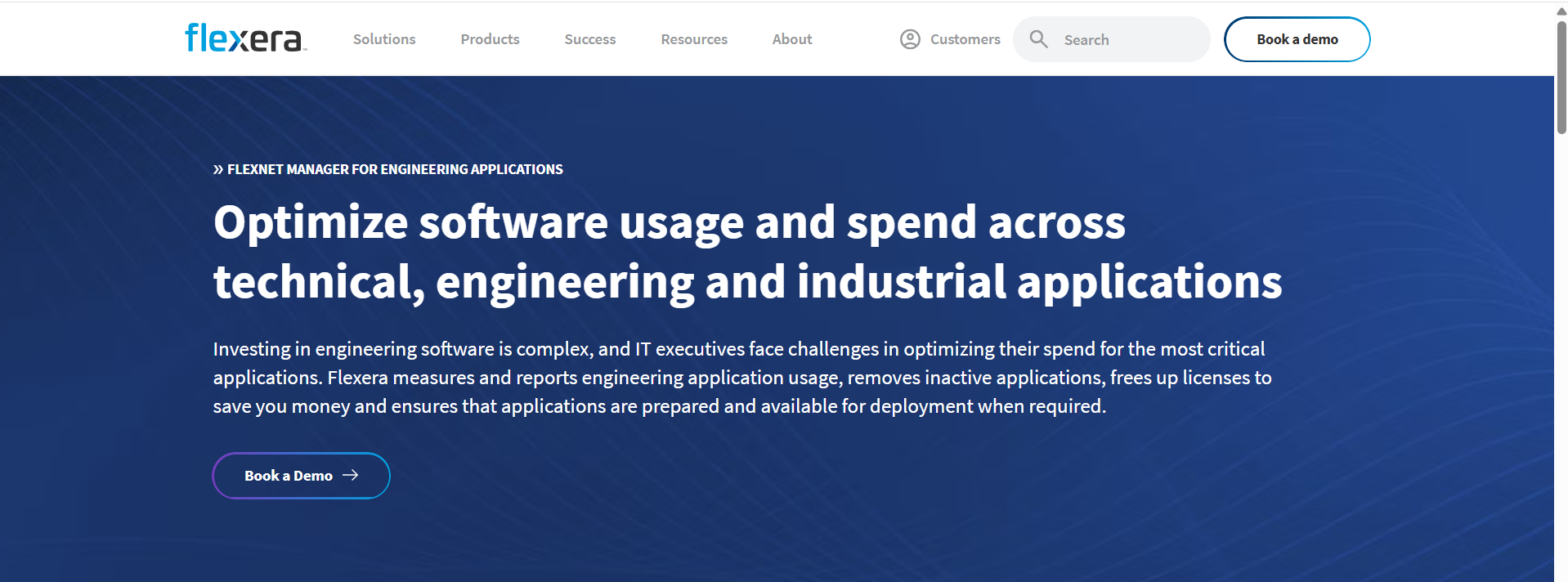
Flexera FlexNet Manager is one of the most established names in enterprise software asset management. It offers broad coverage across on-premise software, SaaS applications, and cloud infrastructure, making it a strong choice for organizations looking for a unified SAM platform across a diverse technology portfolio.
FlexNet Manager provides detailed license position reporting, helping organizations understand their compliance status across major software publishers. It includes hardware asset discovery, software normalization, and publisher-specific license rules for major vendors including Microsoft, IBM, Oracle, and SAP.
The platform also supports SaaS management through Flexera’s broader product suite, giving IT teams visibility into cloud application subscriptions alongside traditional on-premise licenses. Its reporting capabilities support audit defense and renewal negotiation workflows.
FlexNet Manager is particularly well regarded for its publisher compliance rules and its ability to handle complex licensing models — enterprise agreements, processor-based licenses, and user-based subscriptions among them.
Ideal for: Large enterprises with diverse software portfolios across multiple publishers, particularly those with significant Microsoft, IBM, Oracle, or SAP environments.
3. Snow License Manager (Snow Software)
Best for: SaaS-heavy enterprises with cloud-first environments
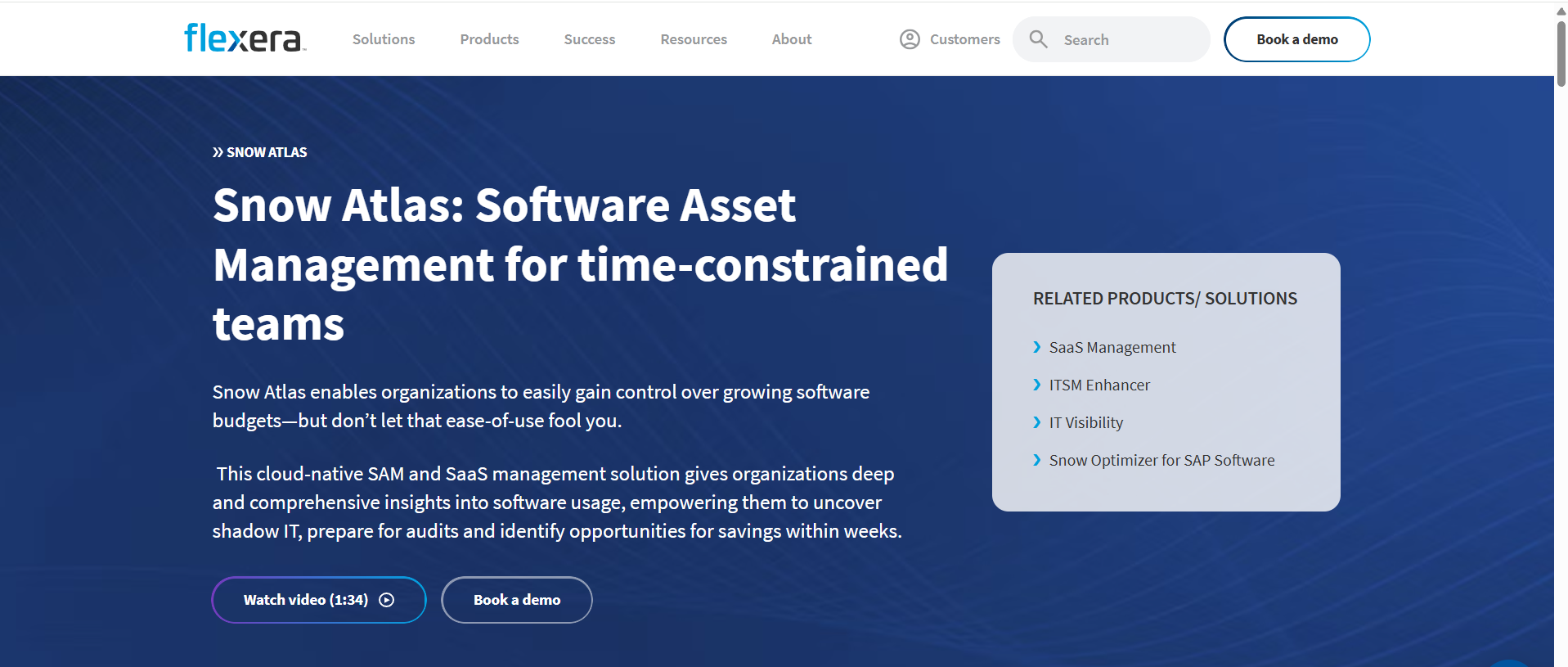
Snow License Manager from Snow Software is a widely adopted enterprise SAM platform with strong capabilities in SaaS visibility and cloud license management. Its Snow Atlas platform provides a unified view of software consumption across on-premise, cloud, and SaaS environments.
Snow’s SaaS Management module is one of its stronger differentiators, offering visibility into cloud application usage, user activity, and spend across a broad range of SaaS vendors. This makes it particularly relevant for organizations where SaaS adoption has outpaced traditional IT governance.
The platform includes license optimization recommendations, cost allocation features, and integration with major ITSM and procurement platforms. Snow also provides hardware asset management alongside its software capabilities, supporting a more complete IT asset management picture.
Snow License Manager’s broad application library and normalization engine help organizations cut through the complexity of managing software across multiple vendors and licensing models.
Ideal for: Enterprises with extensive SaaS portfolios and cloud-first infrastructure strategies seeking broad SAM coverage across both traditional and modern application stacks.
Additional Read: OpenLM engineering update: Migrating to AWS S3 Tables (Iceberg)
4. Open iT License Analyzer
Best for: Engineering software usage analytics and reporting
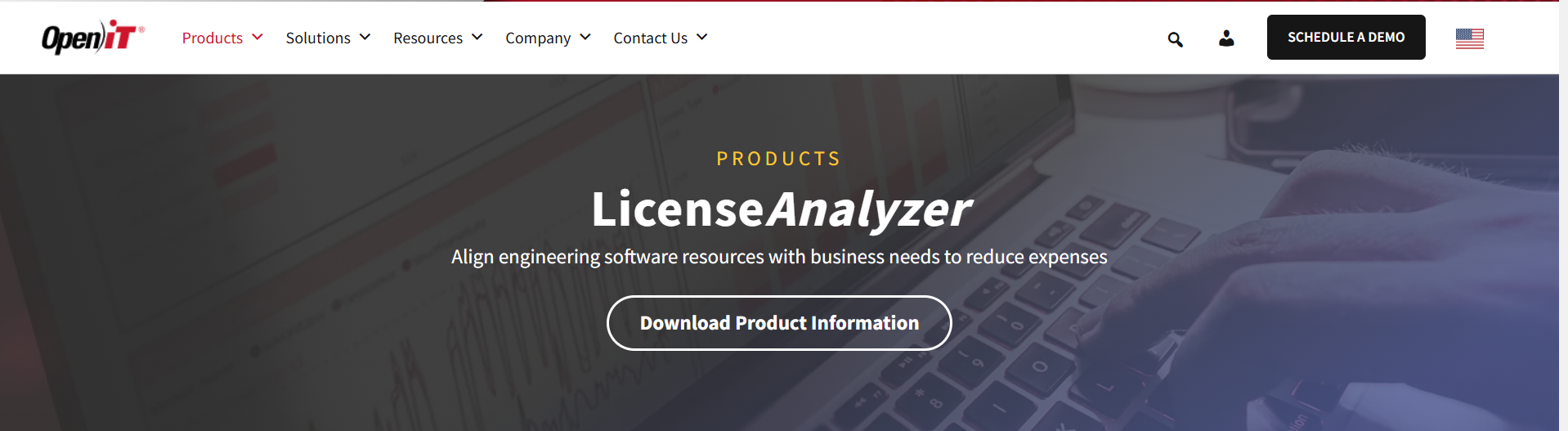
Open iT License Analyzer is a specialist platform focused on usage analytics and reporting for engineering and technical software applications. It provides detailed tracking of license consumption for high-cost engineering tools, helping organizations understand usage patterns and identify optimization opportunities.
Open iT’s strength lies in its reporting depth for engineering software. The platform collects granular usage data across applications from vendors like Autodesk, Bentley, Dassault Systèmes, and others, and presents it in configurable dashboards and reports that support both operational and executive decision-making.
The platform supports license optimization through usage-based insights, helping organizations identify underused licenses and build the data case for right-sizing at renewal. It also provides audit support through historical usage records.
Open iT operates primarily in the analytics and reporting layer of license management, complementing broader SAM platforms in some deployments.
Ideal for: Organizations in engineering-heavy industries looking for usage analytics and reporting on their specialty software portfolios.
5. USU Software Asset Management
Best for: Enterprise SAM with strong ITIL alignment and European compliance requirements
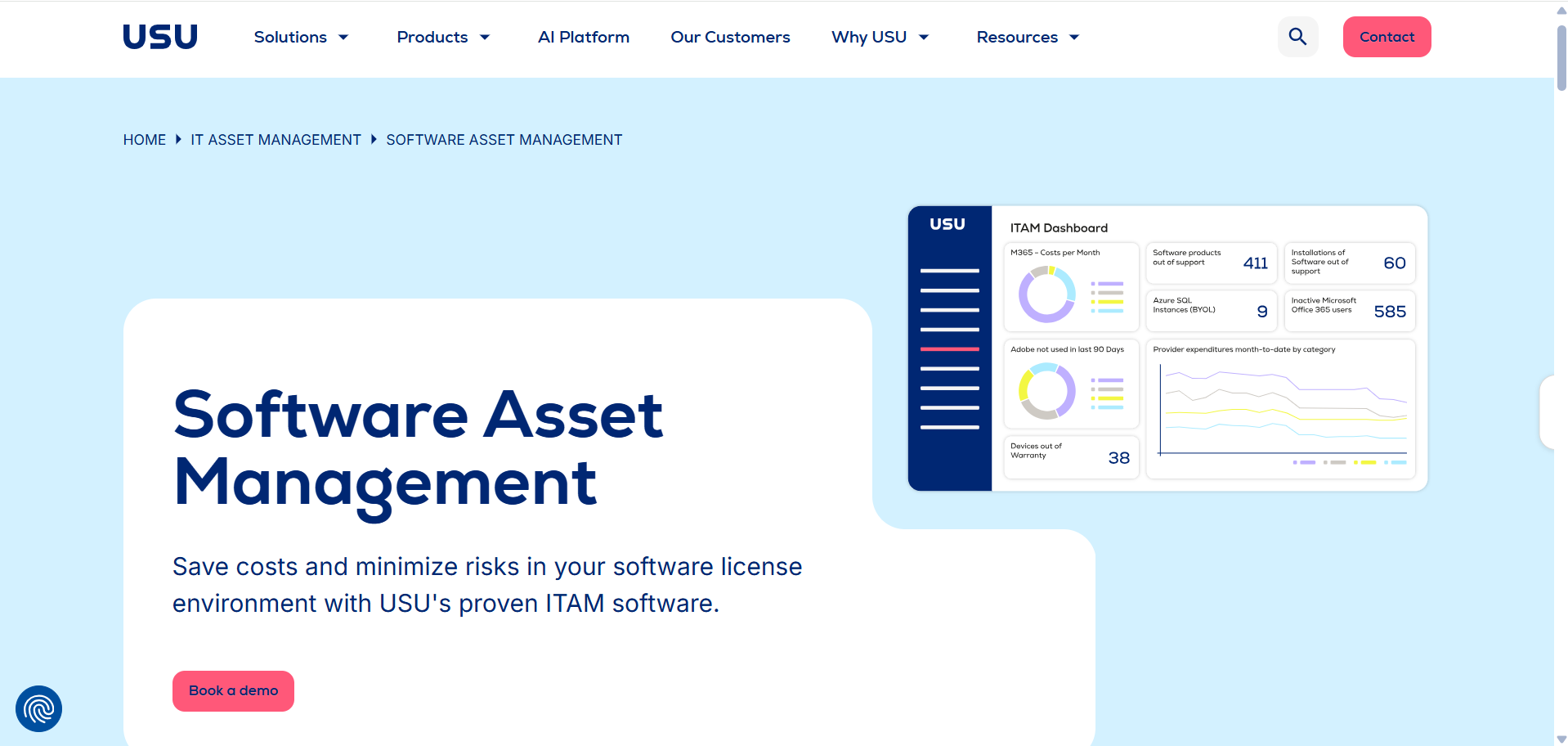
USU Software Asset Management is an enterprise-grade SAM platform with strong roots in IT service management and ITIL-aligned processes. The platform covers software license management, hardware asset management, and contract lifecycle management within a unified environment.
USU SAM provides license compliance reporting, software normalization, and publisher-specific license rule management across a broad range of enterprise vendors. Its integration with IT service management workflows supports structured governance processes and audit readiness.
The platform is particularly well regarded in European markets, where it aligns with local data protection and compliance requirements. USU’s broader software portfolio includes IT service management and knowledge management tools, making it a natural fit for organizations already within the USU ecosystem.
USU SAM supports both on-premise and cloud deployment models, and its contract management capabilities add value for organizations looking to manage the full software lifecycle from procurement through renewal.
Ideal for: European enterprises and multinational organizations with complex compliance requirements and strong ITSM governance frameworks.
Additional Read: Shelfware licenses: Identifying and reducing wasted software costs
6. ManageEngine AssetExplorer
Best for: Mid-market IT teams seeking integrated ITAM and license management
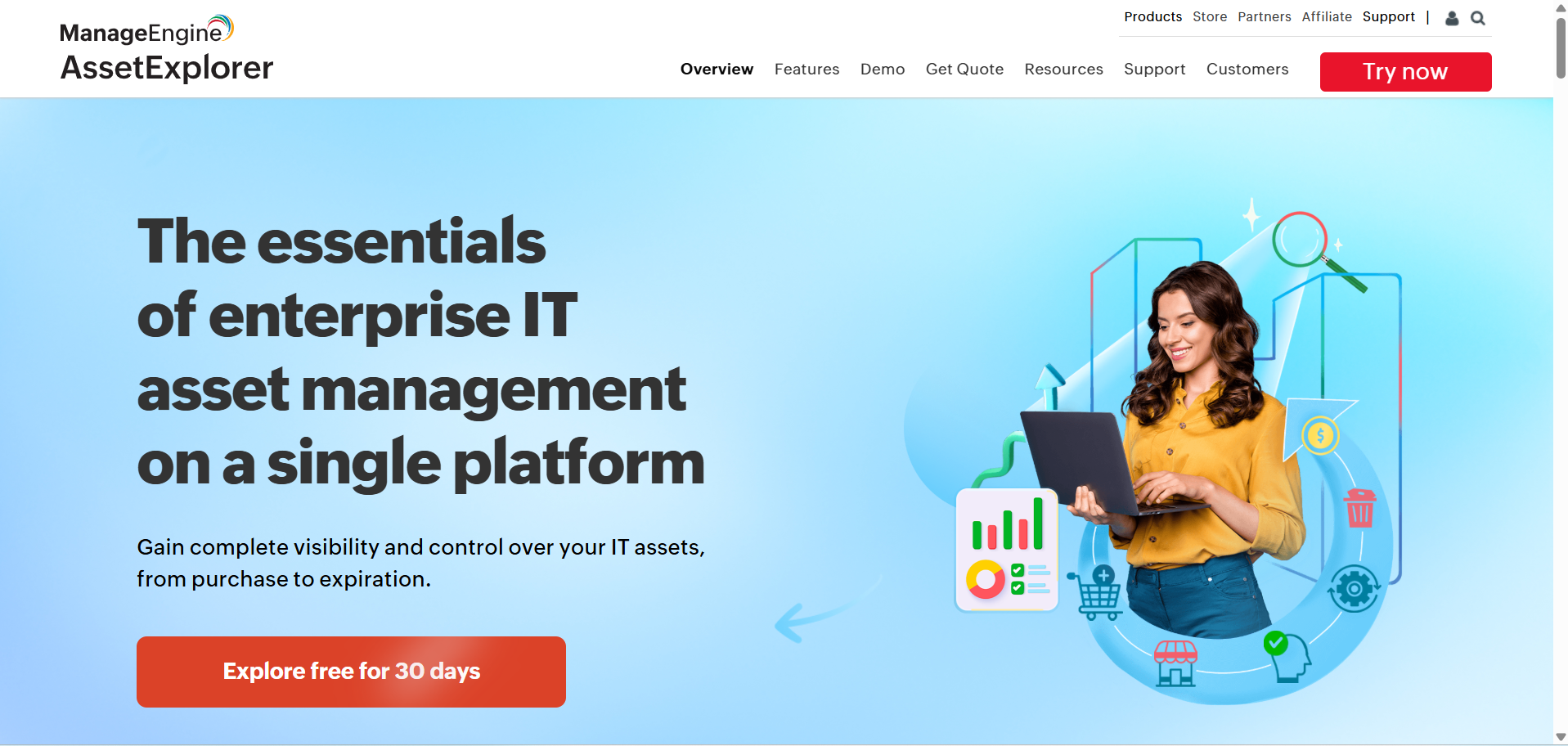
ManageEngine AssetExplorer is an IT asset management platform that includes software license management as part of a broader ITAM capability set. It provides asset discovery, software license tracking, compliance monitoring, and purchase order management within a single interface.
AssetExplorer integrates natively with the ManageEngine ecosystem — including ServiceDesk Plus for ITSM and other ManageEngine tools — making it a practical choice for organizations already using ManageEngine products. Its software compliance module tracks license allocations against entitlements and flags over-deployment or under-licensing situations.
The platform covers both on-premise and cloud-based assets and provides reporting on license usage, compliance status, and asset lifecycle. AssetExplorer is generally positioned at the mid-market and offers a more accessible entry point than some of the larger enterprise SAM platforms.
Ideal for: Mid-market organizations and growing enterprises looking for integrated ITAM and license compliance capabilities within a broader IT management platform.
The hybrid reality of license management in 2026
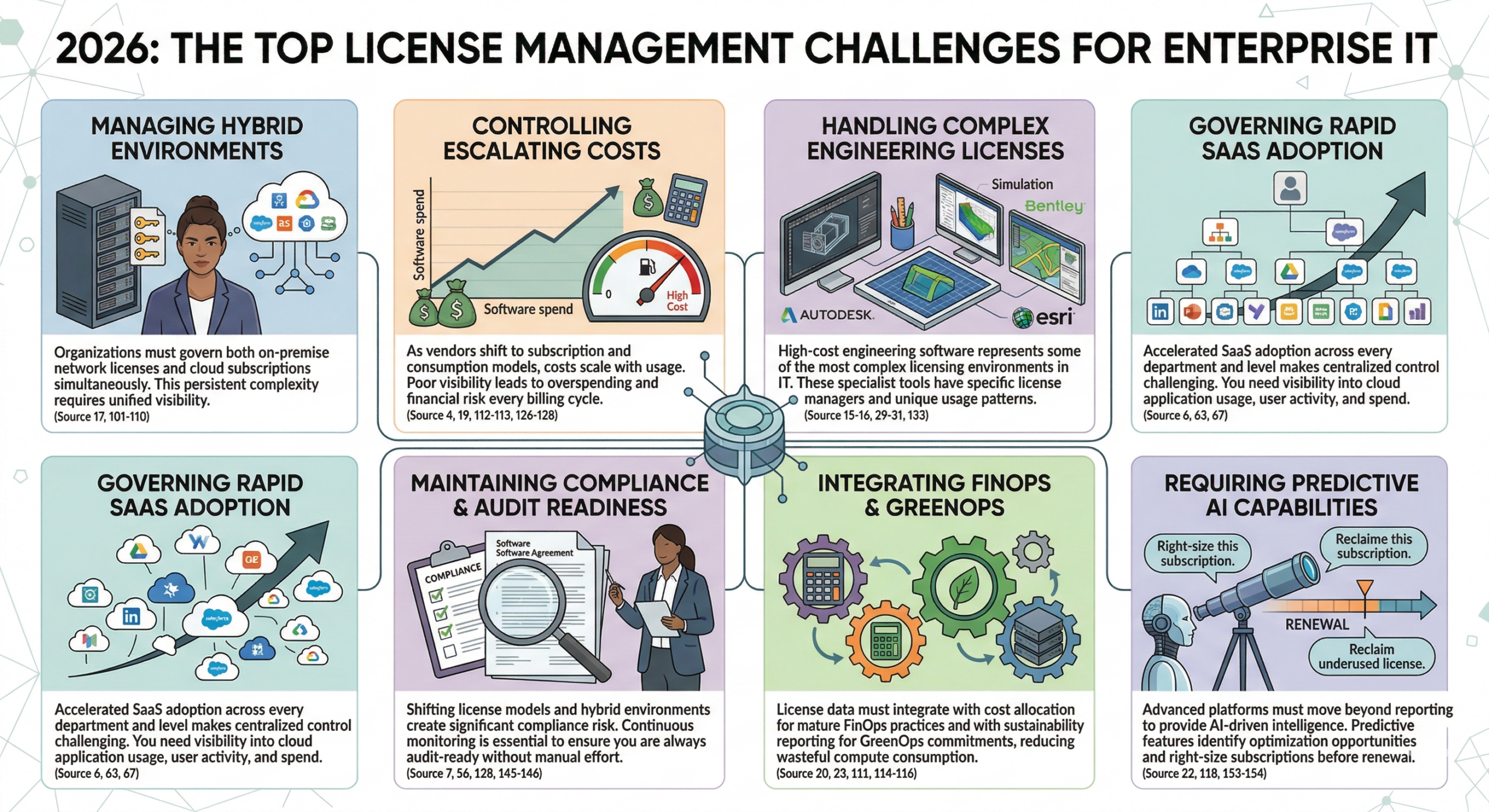
The central challenge facing enterprise IT teams today is not choosing between on-premise and cloud license management. It is managing both — simultaneously, often within the same vendor relationship.
Major engineering software vendors are accelerating their transitions to cloud-delivered licensing. Autodesk has moved the majority of its product portfolio to subscription-based, cloud-managed licensing through Autodesk Identity and Flex consumption models. Esri has expanded ArcGIS Online and its cloud licensing offerings significantly, alongside its traditional network license server infrastructure. Other major engineering software vendors are following similar trajectories, at varying speeds.
The practical consequence for enterprise IT is a hybrid licensing reality that is likely to persist for years. Organizations running large-scale engineering operations typically have some teams on legacy network licenses, others on cloud subscriptions, and some products straddling both models within a single vendor relationship. Managing this complexity requires a platform that monitors both environments with equal depth — not a tool that handles one well and approximates the other.
This hybrid reality also intersects directly with FinOps and GreenOps priorities. As cloud subscription costs scale directly with consumption, the financial stakes of poor visibility increase. Organizations that cannot see their cloud license usage in real time are not just flying blind operationally — they are taking on avoidable financial and compliance risk every billing cycle.
From a GreenOps perspective, software sprawl and idle license consumption represent not just budget waste but resource waste. Unnecessary software deployments consume compute resources, extend device lifecycles unnecessarily, and contribute to the energy footprint of enterprise IT operations. Sustainability-conscious organizations are beginning to include software efficiency metrics alongside hardware and infrastructure measures in their ESG reporting — a trend that will accelerate as regulatory requirements around corporate sustainability reporting tighten.
License monitoring solutions that provide idle detection, process monitoring, and usage efficiency reporting are uniquely positioned to support these emerging requirements. OpenLM’s combination of engineering software depth, SaaS coverage, AI-driven optimization, and resource efficiency monitoring makes it one of the most complete platforms available for navigating the hybrid, FinOps-aligned, and sustainability-conscious license management environment of 2026.
Ready to see how OpenLM handles your hybrid license environment? Request a demo and find out how OpenLM customers reduce engineering software spend by 15–25% in their first year.
Frequently asked questions
What is license management software?
License management software helps organizations track, optimize, and maintain compliance across their software license portfolios. It monitors who is using which licenses, identifies waste and underutilization, supports cost allocation, and provides the data needed for audit defense and renewal negotiation.
Why is license management important in 2026?
Software costs continue to rise as vendors shift to subscription and consumption-based pricing models. Engineering software, SaaS platforms, and cloud-delivered applications all carry ongoing costs that scale with usage. Without active monitoring and optimization, organizations routinely overspend on licenses they do not fully use — and carry compliance risk on those they under-license.
What are the key features of top license management tools?
The most capable platforms in 2026 offer real-time usage analytics, automated license reclamation, cost allocation and chargeback reporting, SaaS and cloud license monitoring, compliance tracking, AI-driven optimization recommendations, and integration with enterprise ITSM and financial operations platforms.
What are the best license management tools in 2026?
The top license management solutions in 2026 include OpenLM, Flexera FlexNet Manager, Snow License Manager, Open iT License Analyzer, USU Software Asset Management, and ManageEngine AssetExplorer. OpenLM leads for organizations with engineering and specialty software portfolios, given its coverage of 90+ engineering license managers.
How does license management software reduce costs?
License management software reduces costs primarily through three mechanisms: identifying idle or underused licenses that can be reclaimed before renewal, providing accurate usage data that supports right-sized license purchases, and enabling chargeback models that create financial accountability across departments. OpenLM customers achieve an average reduction of 15–25% in engineering software spend within their first year.
What is the difference between SAM and license management?
Software asset management (SAM) is a broader discipline that covers the full lifecycle of software assets — procurement, deployment, usage, compliance, and retirement. License management is a core component of SAM, focused specifically on tracking entitlements, monitoring usage, and maintaining compliance. Many enterprise platforms offer both capabilities within a unified tool.
Can license management tools handle SaaS applications?
Yes. Leading platforms now monitor SaaS applications alongside traditional on-premise software. OpenLM currently supports approximately 52 SaaS platforms, including Autodesk on cloud and ArcGIS Online from Esri, and continues to expand its SaaS coverage.
How do license management tools ensure compliance?
License management tools ensure compliance by continuously monitoring deployed and active licenses against purchased entitlements, flagging over-deployment or unauthorized usage, and maintaining historical usage records for audit defense. Real-time compliance monitoring means organizations are always audit-ready rather than scrambling to reconstruct records when a vendor initiates a review.
Who should use license management software?
Any organization running a significant portfolio of commercial software licenses benefits from license management software. The value is highest for organizations in engineering-intensive industries — AEC, manufacturing, energy, defense, and higher education — where specialty software licenses carry the greatest costs and the most complex licensing structures.
What should you look for when choosing a license management tool?
Evaluate tools based on their coverage of the specific license managers and applications in your portfolio, their ability to monitor hybrid on-premise and cloud environments, the depth of their usage analytics and reporting, their integration with your existing ITSM and financial platforms, and their track record with organizations of similar size and industry profile.
How does AI impact license management in 2026?
AI is beginning to shift license management from a reporting discipline to a predictive one. AI-driven features can analyze historical usage patterns to recommend right-sized subscription tiers, flag anomalous consumption before it becomes a compliance issue, and identify reclamation opportunities automatically. OpenLM’s Subscription Optimizer currently brings this capability to Autodesk Cloud and LinkedIn Sales Navigator, with additional platforms on the roadmap.
Disclaimer: The information provided in this blog post about third-party software products — including Flexera FlexNet Manager, Snow License Manager, Open iT License Analyzer, USU Software Asset Management, and ManageEngine AssetExplorer — is based on publicly available information at the time of writing and is intended for general informational purposes only. OpenLM makes no warranties, express or implied, regarding the accuracy, completeness, or currentness of this information. Product features, pricing, and availability are subject to change by their respective vendors. This content does not constitute an endorsement of, or a formal comparison with, any third-party product. Readers are encouraged to consult each vendor’s official documentation and conduct their own evaluation before making purchasing decisions. All product names, logos, and trademarks referenced are the property of their respective owners.