The legal conflict between a South Asian oil refinery company and a global software giant, which erupted this week (and was resolved too), was more than just a corporate dispute. It was a defining moment in the debate over cloud versus on-premise licensing. The issue became news when the end customer approached an Indian court, alleging that their cloud services were discontinued unilaterally.
While the software vendor was not available for immediate comment, sources close to the matter claimed it was a matter of sanctions arising from geopolitical tension in another part of the globe.
The affected organization claimed that this sanction was imposed even though they were holding “fully paid-up licenses.” However, the software giant restored the cloud services hours after the matter became public.
This whole controversy paved the way for a fresh look at the possible risks of a cloud-only approach, when it comes to hosting critical organizational data in a third-party platform. For years, the siren song of the cloud—offering scalability, convenience, and a subscription-based model—has been irresistible. But this case forces us to ask a crucial question: in our rush to the cloud, what have we given up?
The answer is stark: control.
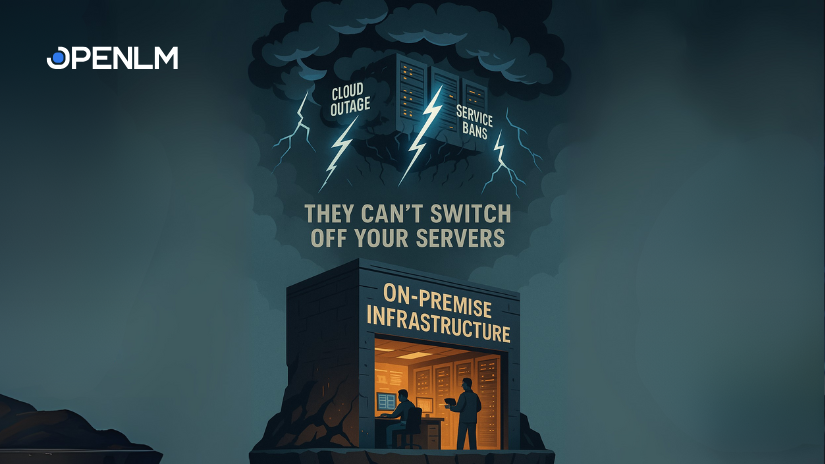
When your software and data live on a vendor’s servers, you are subject to their rules, their stability, and their geopolitical pressures. A remote switch can be flipped, and your business grinds to a halt.
Additional Read: How to track offline usage of borrowed dSPACE licenses
The on-premise bliss: Why control is the ultimate feature
Imagine if the oil company’s critical communication and collaboration tools were running on their own servers, within their own data centers. While a cloud vendor could still cease support or refuse future updates due to sanctions, they could not have remotely disabled the existing, functioning software.
These are the core, undeniable benefits of on-premise software:
- Operational sovereignty: The software runs on your hardware. It cannot be remotely suspended. Your teams could have continued to communicate, collaborate, and access their data, preventing the immediate operational paralysis the oil enterprise faced.
- Data custody: With on-premise solutions, your proprietary data remains securely within your own infrastructure. The risk of a vendor holding your own data hostage is completely eliminated.
- Resilience against external shocks: An on-premise license is a durable asset. Once deployed, its core function is insulated from the vendor’s corporate policy changes or external pressures like international sanctions. Business continuity is preserved.
Additional Read: The future of software asset management: Trends to watch in 2025
Navigating the hybrid reality with OpenLM
A complete retreat from the cloud isn’t practical for most modern enterprises. The future is undeniably hybrid, a complex mix of SaaS subscriptions and on-premise licenses. The key is not to choose one over the other, but to manage this complexity with intelligence and strategic foresight.
This is where OpenLM becomes indispensable.
OpenLM provides a unified, comprehensive view of your entire software estate—both cloud and on-premise. Our platform empowers you to:
- Map your vulnerabilities: We give you a clear dashboard showing exactly which business functions rely on cloud vendors versus which are secured on-premise. This allows you to identify unacceptable risks, like having your entire communication backbone dependent on a single, vulnerable provider.
- Master your on-premise assets: For the expensive, mission-critical on-premise software that forms the bedrock of your operations (e.g., engineering, design, or database tools), OpenLM ensures you extract maximum value. We track usage, harvest idle licenses for reallocation, and guarantee compliance, dramatically reducing costs on your most secure assets.
- Make data-driven strategic decisions: With a complete picture of your software usage, you can make informed choices. Is a specific cloud service too risky? Use OpenLM data to justify the business case for migrating to a more resilient on-premise alternative.
The current legal dispute reflects that convenience cannot come at the cost of control. In an unpredictable world, the ability to keep operations running is paramount, and on-premise software is a foundational pillar of that resilience.
Don’t wait to find out which of your services is vulnerable. Use OpenLM to map your software landscape and take back control. Contact us for a discovery call today.